
Section 2: Introduction to the Alberta Weekly Newspapers Association (AWNA) Policy Framework
The Board is responsible for governing and establishing policies for the AWNA to provide services, as defined in its objects and bylaws. Governance is the way in which the Board exercises its authority, control, guidance, and direction. Through governance, the Board sets the tone and future direction of the AWNA. The Board governs by:
• Setting policy
• Establishing goals
• Building linkages with both internal and external stakeholders
• Monitoring policy and outcomes
• Ensuring that the Board carries out its governance role
Effective governance requires that the Board:
• Fulfils the AWNA’s mandate
• Ensures the AWNA’s sustainability
• Monitors and ensures the relevancy of the AWNA
• Maintains the AWNA’s accountability to its members
To accomplish this, the Board establishes five (5) types of policies:
• Foundation
• Board Process
• Board – Executive Director Linkage
• Operations, in the areas of:
- Finance
- Human Resources
- Programs and Services
• External Linkages
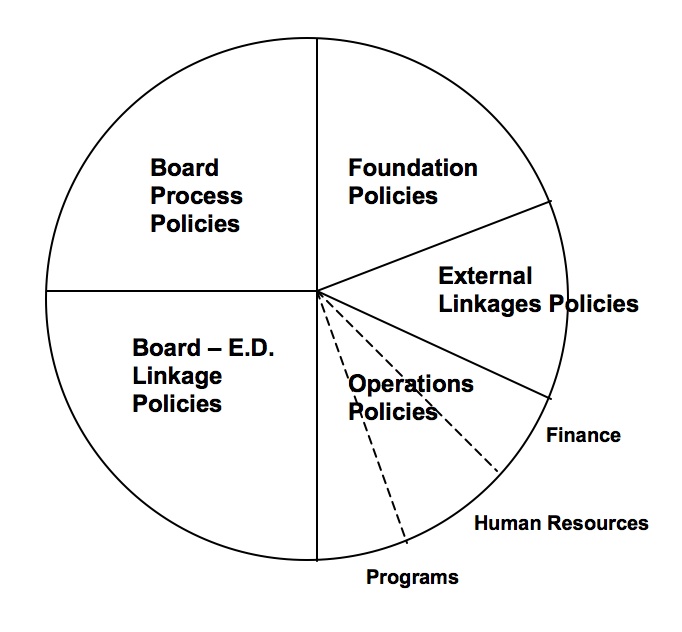 |
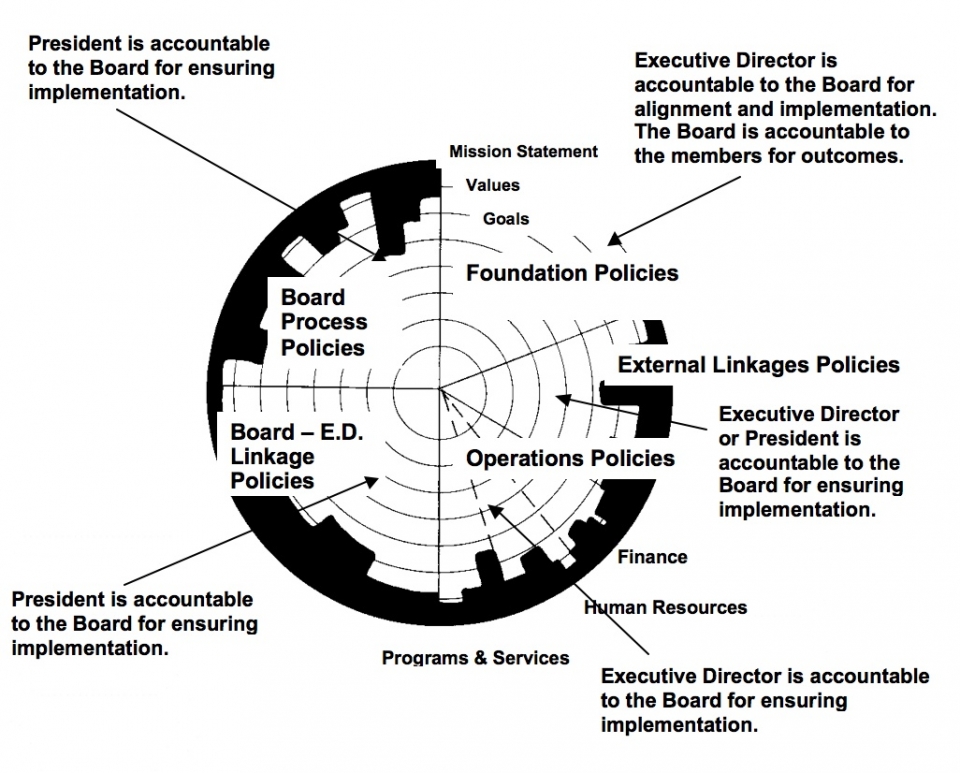
Foundation policies form the broad framework for the AWNA, and describe the difference that the AWNA will make in Alberta. All other AWNA policies must align with the foundation policies. The Board is accountable to its members for ensuring that these policies are carried out. The AWNA’s foundation policies are its:
F-1 Mission Statement
F-2 Values
F-3 Goals
F-4 Privacy Policy
Board Process policies define the work of the Board, and the Board’s conduct, activities, methods, and practices. The President is accountable to the Board for ensuring that these policies are carried out. The AWNA’s Board process policies are:
BP-1 Role of the Board
BP-2 Policy Making
BP-3 Role of the Board Member
BP-4 Role of the President
BP-5 Role of the Officers: Vice-President and Corporate Secretary
BP-6 Board Member’s Code of Conduct
BP-7 Board Committee Principles
BP-8 Committee Terms of Reference
BP-8.1 Advertising Committee Terms of Reference
BP-8.2 AWNA Bing Crosby Golf Tournament Committee Terms of Reference
BP-8.3 Better Newspapers Competition Committee Terms of Reference
BP-8.4 Convention Committee Terms of Reference
BP-8.5 Executive Committee Terms of Reference
BP-8.6 Government and External Relations Committee Terms of Reference
BP-8.7 Symposium and Industry Education Committee Terms of Reference
BP-8.8 Membership Committee Terms of Reference
BP-8.9 Nominating Committee Terms of Reference
BP-8.10 Technology and Social Media Committee Terms of Refernce
BP-8.11 Audit Committee Terms of Reference
BP-9 Committee Chair: Position Description
BP-10 Board Member and Board Committee Expenses
BP-11 Board Meeting Process and Agenda Development
BP-12 Appointment to External Committees
BP-13 Orientation and Training
BP-14 Succession Planning and Nominations
BP-15 Linkage to the Membership
Board – Executive Director Linkage policies describe the relationship between the Board and the Executive Director, the Board’s delegation of authority and responsibility to the Executive Director, and the Board’s monitoring of the Executive Director’s performance. The President is accountable to the Board for ensuring that these policies are carried out. The AWNA’s Board – Executive Director linkage policies are::
BL-1 Delegation to and Job Function of the Executive Director
BL-2 Communication and Counsel to the Board
BL-3 Evaluation of the Executive Director
BL-4 Executive Director Compensation
BL-5 Succession Planning
Operations policies set by the Board establish broad parameters and limitations in AWNA’s three (3) operational areas:
• Finance
• Human Resources
• Programs and Services
The Executive Director is accountable to the Board for ensuring that these policies are carried out.
The AWNA’s finance policies are:
OF-1 Financial Planning and Budgeting
OF-2 Financial Condition
OF-3 Asset Protection and Risk Management
OF-4 Capital Assets – Acquisition and Disposal
OF-5 Investments
OF-6 Confidential Submission Policy
OF-7 Reserve Fund
The AWNA’s human resources policies are:
OHR-1 Treatment of Employees
OHR-2 Compensation and Benefits
OHR-3 Performance Awards
OHR-4 Temporary Executive Director Succession
OHR-5 Code of Conduct
OHR-6 Personnel Policy Manual
The AWNA’s programs and services policies are:
OPS-1 Members Rights, Benefits, and Obligations
OPS-2 Awards and Recognition
OPS-3 Member Training and Education
OPS-4 Advertising Services
OPS-5 Member Communication, Networking, and Promotional Tools
OPS-6 Market Research
OPS-7 Digital Archives
OPS-8 Internships
External Linkages policies provide direction for establishing relationships with AWNA and external stakeholders. The President and/or the Executive Director, as specified in policy, are accountable to the Board for ensuring that these policies are carried out. The AWNA’s external linkages policies are:
EL-1 Linkages with Key Stakeholders
EL-2 Public Image and Media Relations
EL-3 Partnerships
EL-4 Position Statements
EL-5 Government Relations
EL-6 Corporate Logo
Policy Development
Policies, like onions, are constructed in layers. They begin on the outside of the policy onion with broad, overarching statements, and become more detailed as they progress toward the centre of the policy onion, where there are detailed policies, sometimes referred to as procedures. When establishing policy, the Board needs to establish comprehensive policies that cover the broadest, highest level of the situation being addressed. Policies begin with broad parameters and move toward enough detail so that the Board is satisfied with any reasonable interpretation of the policy by whoever is delegated the responsibility of implementing the policy. For operations policies, the Board usually delegates the authority and responsibility for implementation to the Executive Director.
 |
The Board establishes broad, inclusive policies to ensure that:
• Numerous, instead of single, situations are covered.
• Not only present situations, but also many unforeseen matters, are covered.
• The Executive Director is able to work creatively to determine the most appropriate way to implement the Board’s directions.
• The Board’s policy documents are kept at a manageable size.
When faced with a new condition, concern, situation, or issue, the Board needs to resist simply reacting to the issue. Instead, the Board needs to think its way out of the specific issue to the broader or higher principal that covers the smaller, narrower issue. By working from the specific situation to the general principle, the Board may find that:
• The issue is already addressed adequately under a current policy and parameter, so nothing needs to be changed.
• A current policy and/or parameter need to be further defined, and made more specific.
• A new parameter needs to be established within an existing policy.
• A new policy, with relevant parameters, needs to be developed.
Thus, leadership in effective policy development means taking a specific condition, concern, situation, or issue, and translating it into a governance-level focus.